

About
Toxics Management Plan
Legacy Contamination & the NRTMP
In 1981, the International Joint Commission completed a Special Report on Pollution in the Niagara River that indicated the Niagara River was a Problem Area where specific water quality objectives were not being achieved. The report called for a comprehensive study of the Niagara River system. Four environmental agencies, Environment and Climate Change Canada (ECCC), United States Environmental Protection Agency (USEPA), Ontario Ministry of the Environment, and Climate Change (MOECC), and New York State Department of Environmental Conservation (NYSDEC) (collectively referred to as the ‘Four Parties’ and known at the time as the Niagara River Toxics Committee) conducted the study between 1981 and 1983, with a final report issued in 1984. The study revealed 261 different chemicals in the waters and sediment, with 89% of pollutants coming from sources on the U.S. side.
In 1987, the Four Parties signed the Niagara River Declaration of Intent (DOI) to achieve significant reductions of chemical pollutants in the Niagara River. Together, the DOI and its work plan make up the Niagara River Toxics Management Plan (NRTMP) to reduce the amount of toxic chemicals discharged to the Niagara River through cooperative and independent agency activities. The NRTMP outlines a series of actions to be undertaken by the Four Parties, including:
- Reduce toxic loadings from direct and indirect discharges;
- Conduct research and monitoring to learn more about the water quality of the river;
- Coordinate methodologies for identifying, quantifying and assessing toxic loadings; and
- Communicate progress to the public.

International Cooperation
On December 3, 1996, the Four Parties signed a Letter of Support to re-affirm their commitment to the NRTMP. The revised objective (as stated in the Letter) is “to reduce toxic chemical concentrations in the [Niagara] River by reducing inputs from sources along the river, with the purpose of achieving ambient water quality that will protect human health, aquatic life, and wildlife, and while doing so, improve and protect water quality in Lake Ontario as well.”
The updated Plan of Action in the 1996 Letter of Support included:
- measures for implementation of point source control;
- trackdown and identification of new sources;
- monitoring progress through the Upstream/Downstream program;
- biomonitoring and the collection of sediment cores;
- remediation and monitoring of progress at hazardous waste sites; and
- relating remediation results to ambient conditions in the river.
Monitoring and Research
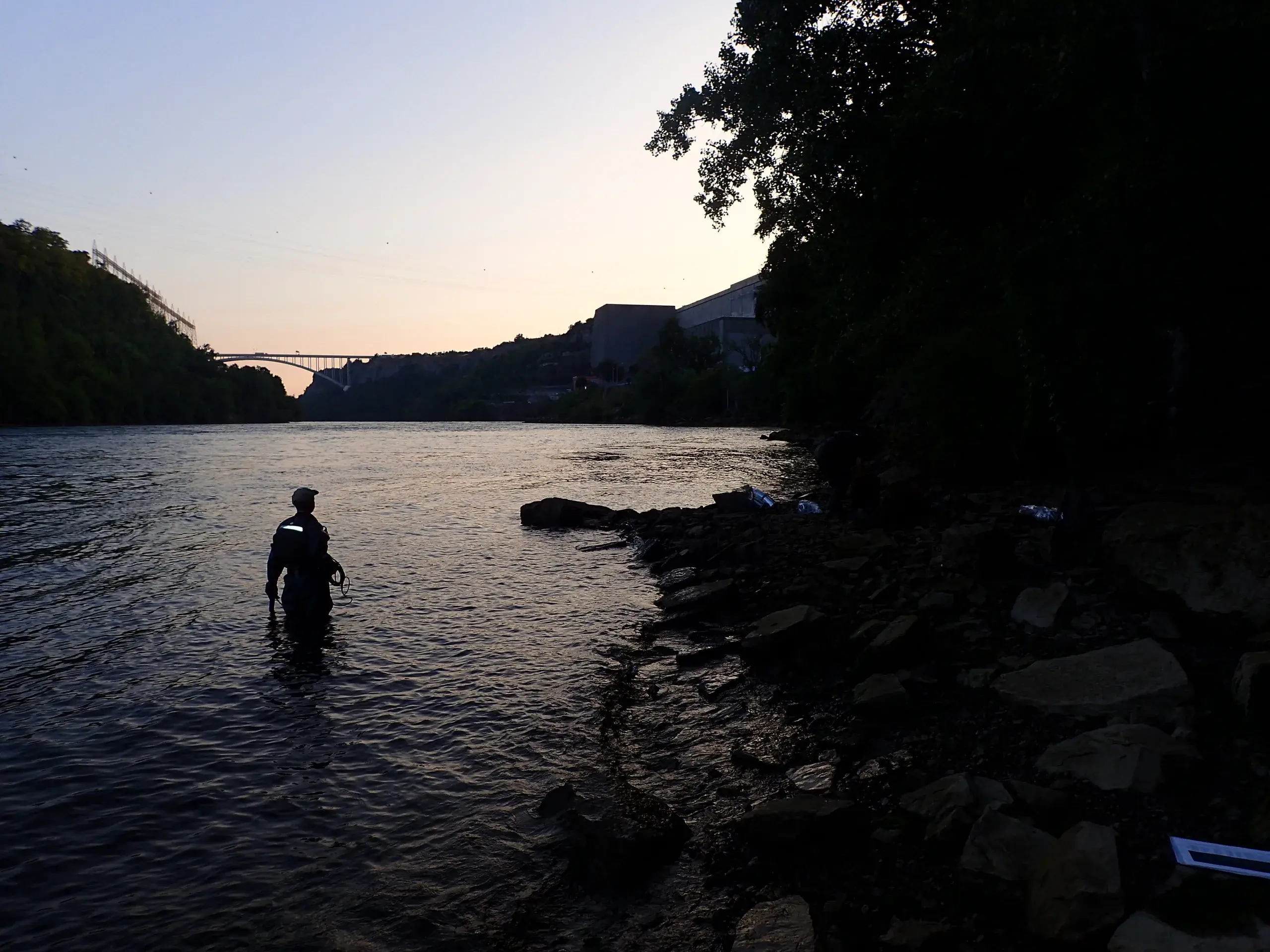
There are three components to monitoring identified in the 1996 Letter of Support: water quality, biomonitoring, and source trackdown.
Water Quality Monitoring
Through the Upstream-Downstream Program conducted by ECCC since 1986, ambient water quality information is collected at Fort Erie (head of the river) and at Niagara-on-the-Lake (mouth of the river) to determine which chemicals are originating upstream (i.e., Lake Erie and above) versus those being discharged from sources within the Niagara River watershed.
Due to the complex nature of this dynamic river system, identifying specific chemical concentrations is extremely challenging. Statistical results (90% confidence intervals) are compared against the strictest criteria amongst the Four Parties to determine relative progress over time.
Biomonitoring (fish and mussels)
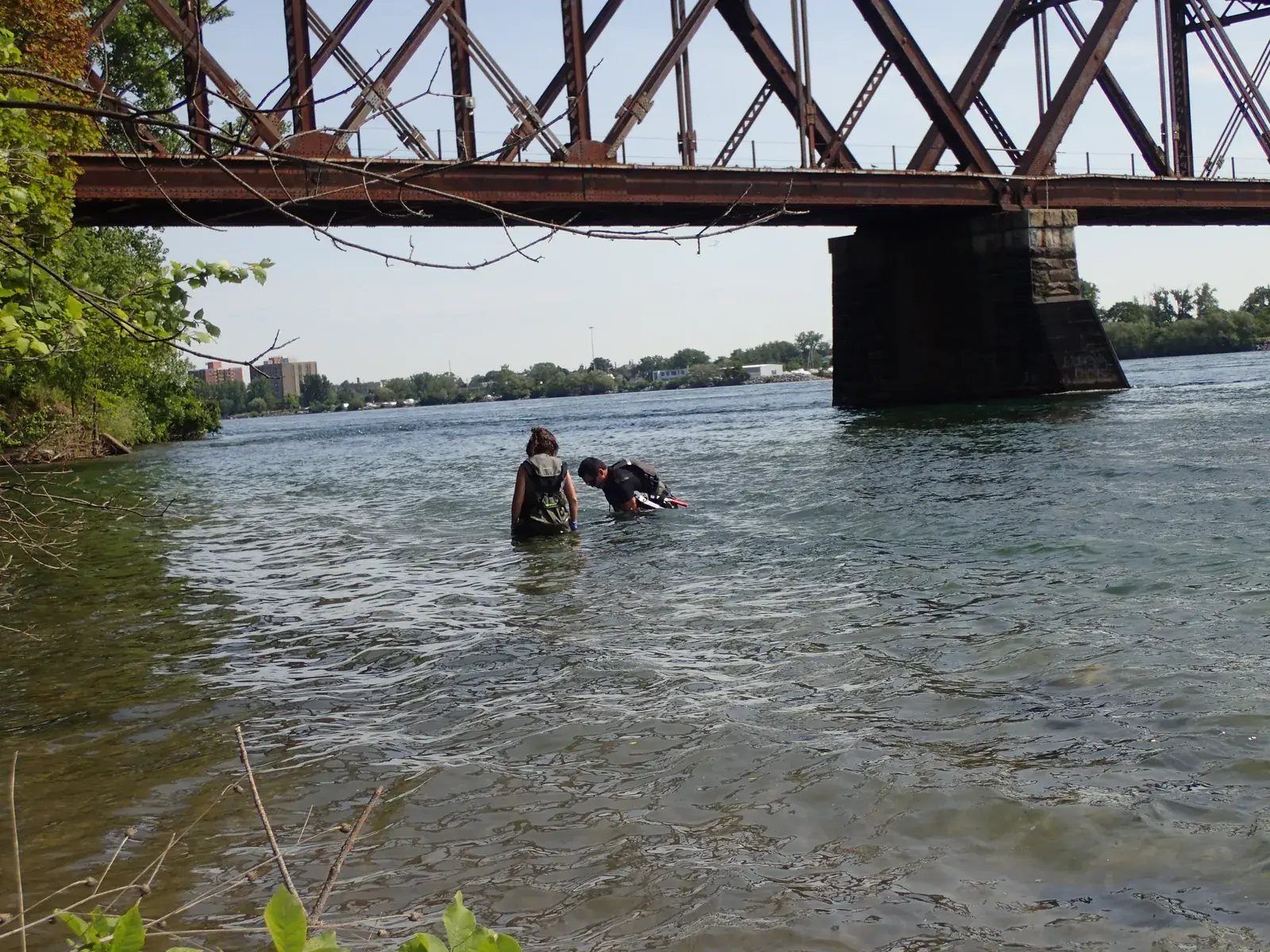
Since 1983, the Ministry of Environment, Conservation, and Parks (MECP) (formerly MOECC) researchers have examined the concentrations of contaminants in caged mussels, and special sampling devices to measure a variety of toxic chemicals that can accumulate in living organisms in the Niagara River.
Young-of-the-year fish are collected by the NYSDEC and the MECP to monitor persistent organic contaminants in the Great Lakes Basin dating back into the 1970s. This information helps find localized problems, determine contaminant trends over time, and are useful to determine the success of cleanup efforts for hazardous waste sites.
Source Trackdown
One of the commitments in the 1996 Letter of Support by the Four Parties was to track-down new sources of pollution to control. Sediment investigations by ECCC (in Canada) and NYSDEC/USEPA (in the United States) focus on tributaries that drain into the Niagara River on both sides of the river. Due to differences in sediment criteria between each country, results are compared to the agency’s own relevant criteria. Results from the sediment studies are combined with water quality and biomonitoring, using a weight-of-evidence approach, to prioritize additional track-down efforts.
Major Accomplishments
The NRTMP met its goal of reducing the ten targeted priority toxics by at least 50%, with reductions exceeding 75% for some substances. More broadly, levels of the plan’s 18 priority toxics declined by as much as 99% between 1986 and 1995. Monitoring through 2019 and 2020 indicates that concentrations of most assessed contaminants continued to decrease over the 33-year monitoring period, although many still exceeded the strictest applicable agency guidelines.
Actions to significantly reduce or eliminate all original point and non-point sources have occurred and continue to be implemented as facilities and sites are identified by the Four Parties.